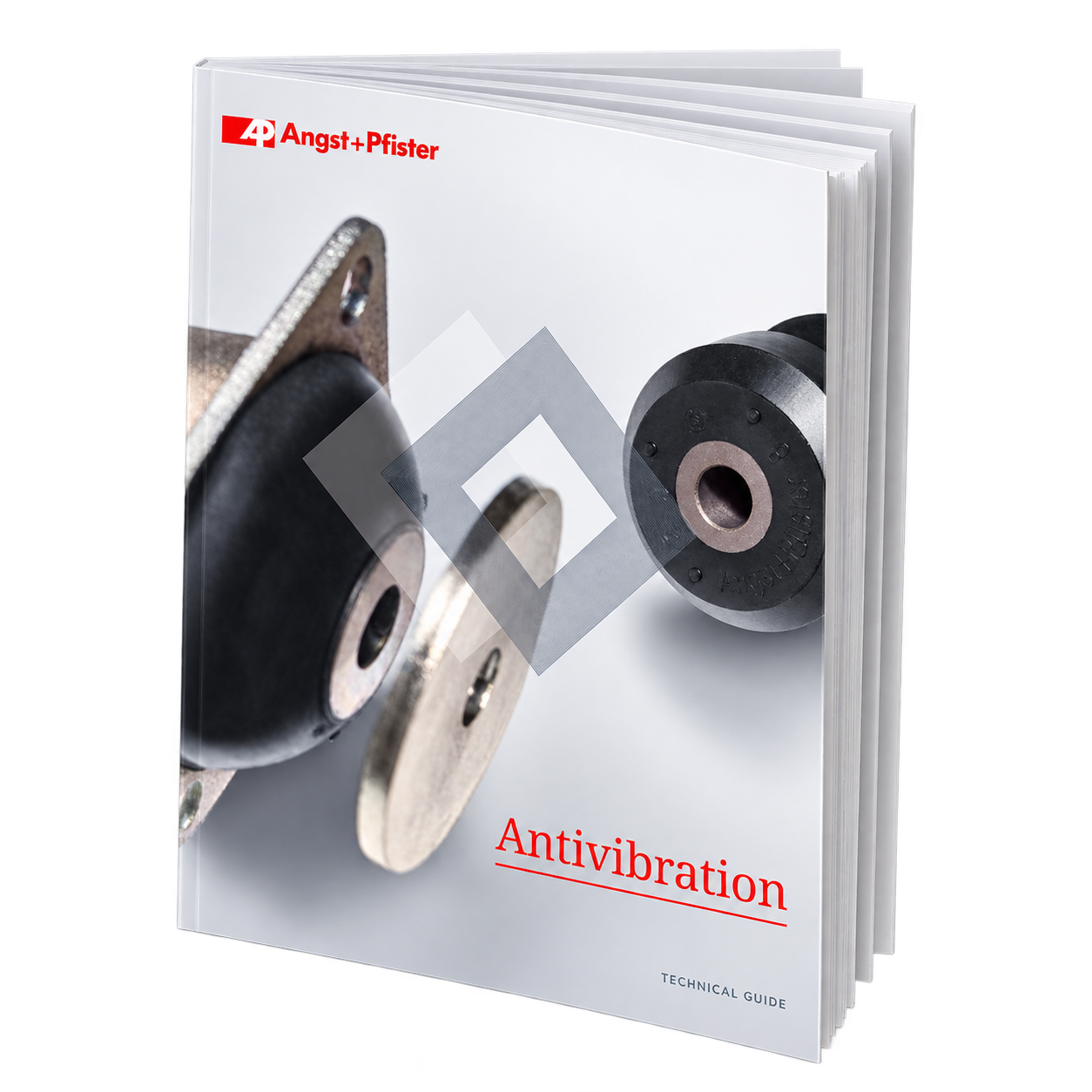
In many construction machinery projects, antivibration is only addressed after the main architecture has been defined. As a result, vibration solutions are often reduced to selecting individual components based on parameters such as stiffness or damping, overlooking the complex interactions that only become apparent under real operating conditions.
With Angst+Pfister as their antivibration partner, our customers benefit from:
- System-level engineering
- One global partner
- End-to-end responsibility
Backed by the global expertise, engineering know-how, and production capabilities of the entire Angst+Pfister Group, we solve complex vibration challenges, reduce development risk, and ensure reliable performance from concept through production. Talk to our experts to discover how a system-level antivibration approach improves your machine's performance and accelerates your development process.
What Would You Like to Explore?
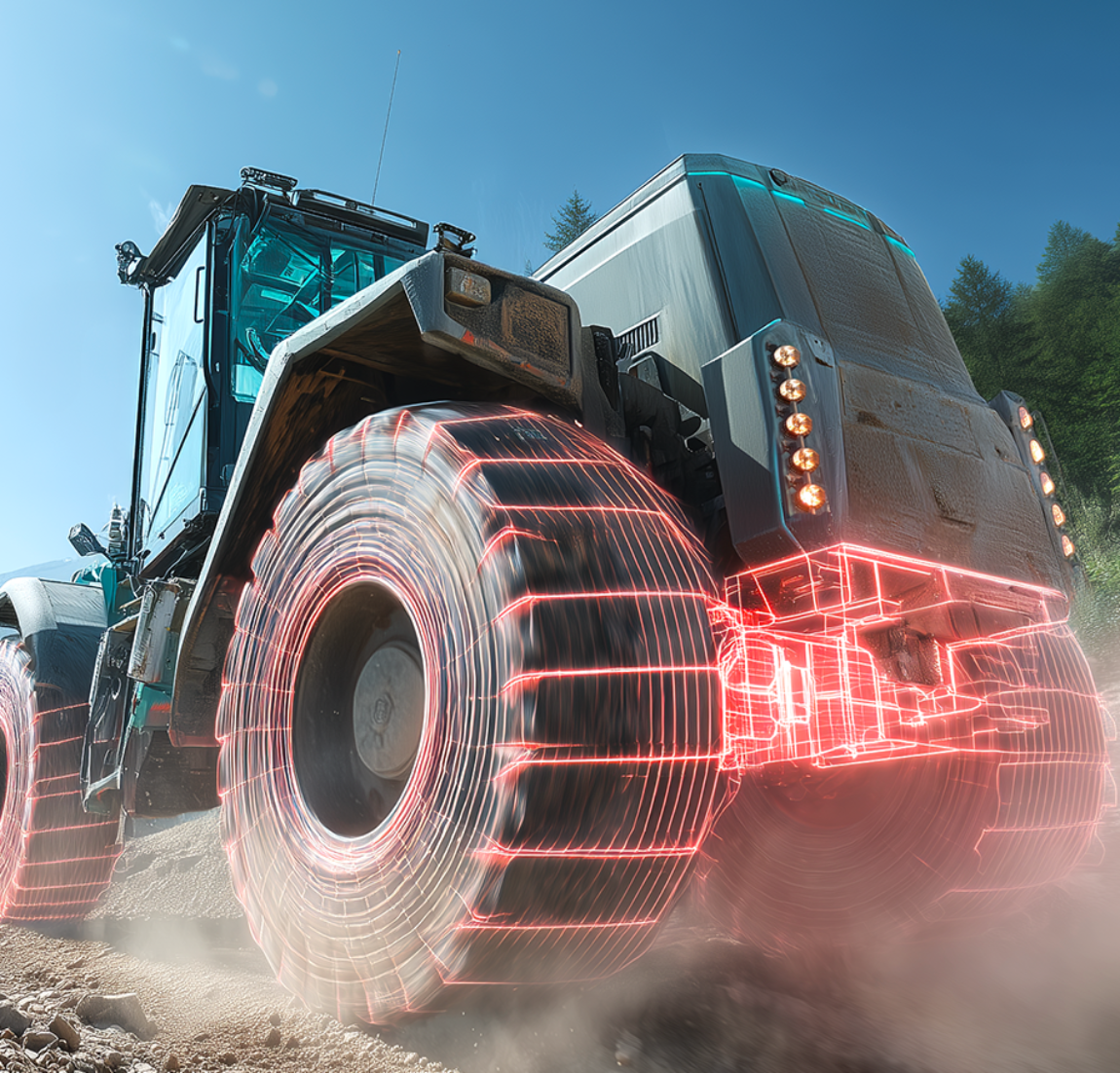
Vibration behavior in construction machinery is determined by the interaction of excitation sources, structural properties, load paths, and operating conditions throughout the machine's duty cycle. Evaluating components in isolation cannot capture these complex interactions or predict how vibration will propagate through the system.
At Angst+Pfister, we take a system-level approach to antivibration engineering, helping customers to:
- Find the root cause of vibration, not just the symptoms.
- Optimize machine performance by considering the complete system.
- Reduce development risk with engineering expertise, simulation, testing, and validation.
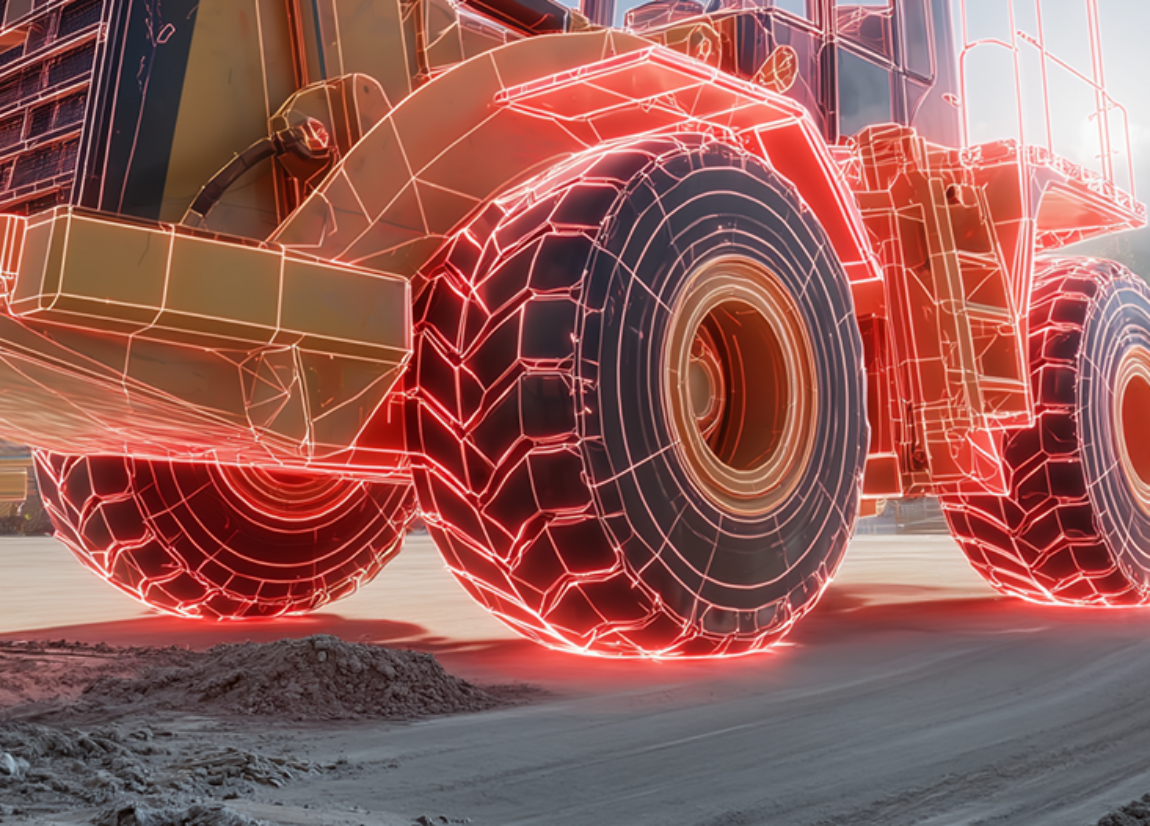
The starting point is not the component, but the dynamic behavior of the machine. By understanding how forces travel through the structure under real operating conditions, we develop vibration solutions that improve the performance of the complete system.
Our approach includes:
- Identifying vibration sources across different operating conditions.
- Analyzing how forces propagate through the machine and interact with connected subsystems.
- Validating system performance under realistic operating conditions before finalizing the solution.
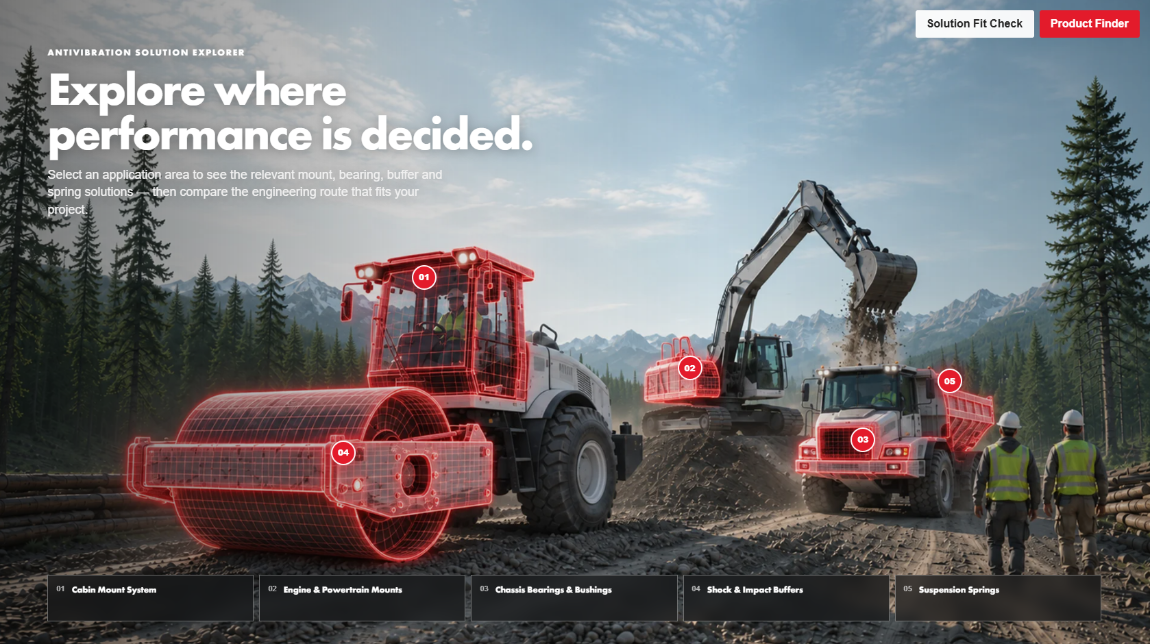
Explore Antivibration Solutions Across the Machine
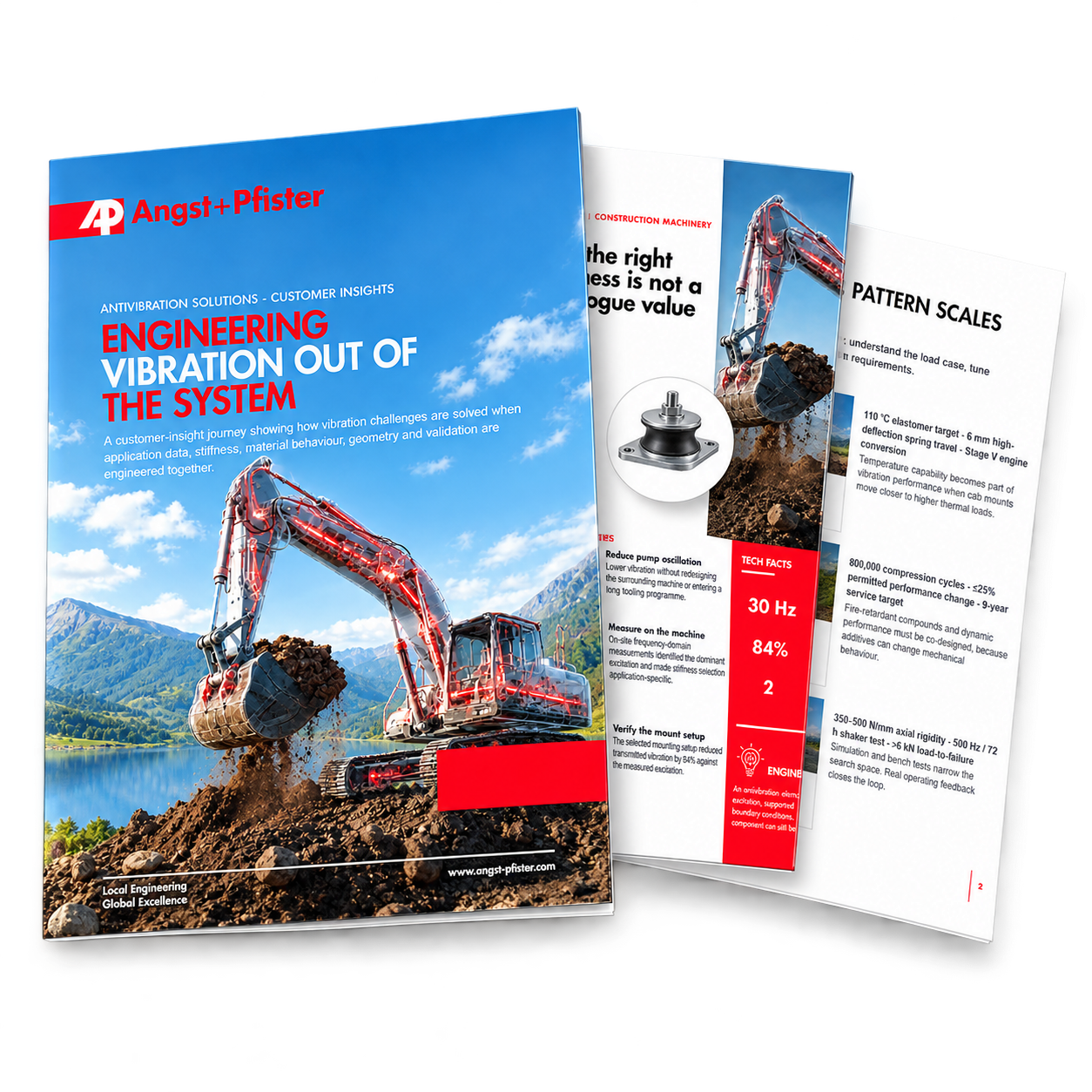
Customer Insights from Real Engineering Projects
Häufig gestellte Fragen (FAQs)
Was sind Smart Elastomere?
Smart Elastomere sind Elastomerkomponenten mit integrierten Sensor- und Signalverarbeitungsfunktionen, die eine Echtzeitüberwachung in mechanischen Systemen ermöglichen.
Was ist ein lastmessendes Elastomer?
Ein lastmessendes Elastomer ist eine strukturelle Elastomerkomponente, die die Kraft direkt im Lastpfad misst, wodurch externe Sensoren überflüssig werden.
Wie dünn können diese Sensoren sein?
Ultradünne Versionen können weniger als 1 mm dick sein, was sie ideal für Anwendungen mit stark begrenztem Platzangebot macht.
Welche Zusatzfunktionen sind über die Kraftmessung hinaus möglich?
Diese Systeme ermöglichen Multiparameter-Sensorik, einschliesslich Vibration, Beschleunigung, Temperatur, Zykluszählungen und Überlasterkennung.
Kann der Sensor auch ohne Elastomerintegration verwendet werden?
Ja. Der Sensor kann auch als eigenständige Komponente verwendet werden und bietet dadurch Flexibilität bei der Systemgestaltung.
Related Articles and Downloads