
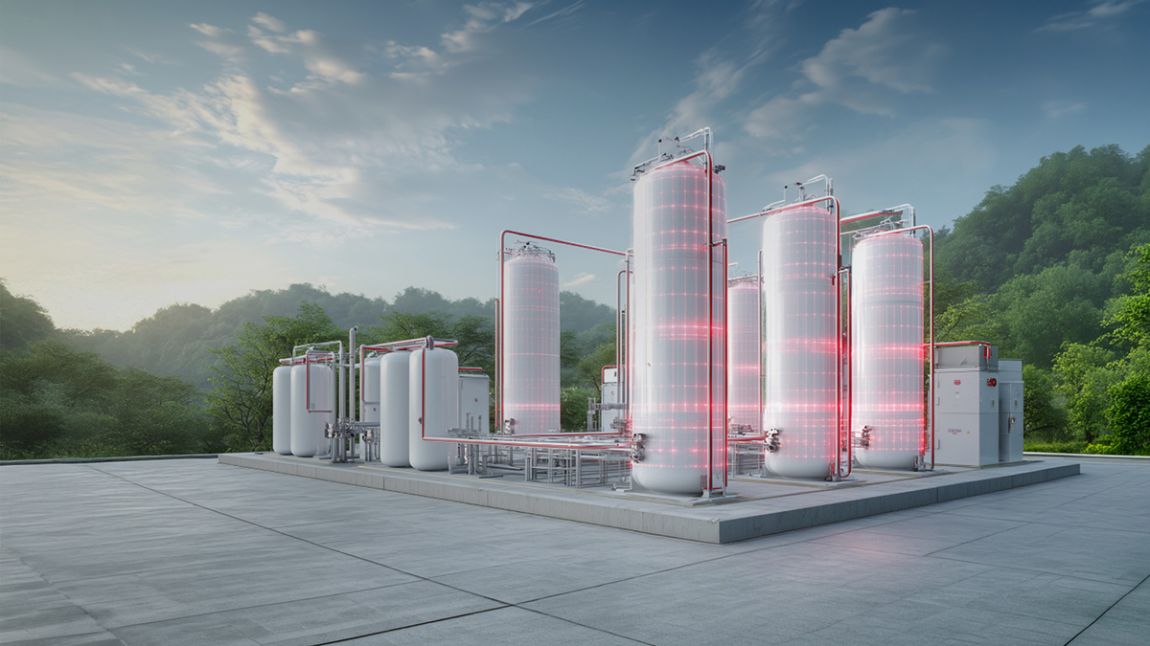
Hydrogen places exceptional demands on sealing systems. Its small molecular size enables rapid diffusion through elastomers, while high pressures, pressure cycling and rapid gas decompression (RGD) challenge sealing performance and system integrity.
Angst+Pfister combines proven material expertise, sealing technology and application engineering with extensive testing under defined hydrogen conditions. From material selection and seal design to validation, we develop hydrogen-ready sealing solutions for demanding operating conditions – helping minimize leakage and permeation and deliver reliable, long-term performance.
What Would You Like to Explore?
 Discover Our White Paper Deepen your knowledge with our white paper and expert insights on seals and sensors to enhance safety.
Download White Paper
 Materials & Components Discover advanced materials and sealing technologies engineered for hydrogen applications.
Explore Solutions
 Sealing Across the Hydrogen Value Chain Explore sealing challenges, requirements and solutions across key hydrogen applications. Explore the Value Chain
 Connect with Our Engineers Discuss your hydrogen sealing application with our experts or meet us at the H2 Technology World Expo in Hamburg. Connect with an Engineer
Our technical white paper provides engineers with practical guidance for hydrogen applications, backed by empirical test data using 100% H₂ at pressures up to 150 bar.
Material Performance
Explore test results on permeation, leakage, rapid gas decompression (RGD), and ageing across HNBR, FKM, EPDM, NBR, and PTFE.
Sensor Engineering
Understand key monitoring requirements based on the 3S Principle: Sensitivity, Selectivity, and Stability, for both LEL and hydrogen concentration monitoring.
Selection Matrix
Compare material performance and identify suitable sealing solutions for applications including electrolyzers, hydrogen storage, valves, and fuel cells.
Tested Materials
Review tested sealing materials and their performance under hydrogen-specific conditions to support reliable material selection for demanding H₂ applications.

Finding the Right Hydrogen Sealing Solution
There is no one-size-fits-all seal for hydrogen. The right combination of material, sealing technology, and geometry depends on the specific operating conditions, from static or dynamic use and pressure cycling to temperature, permeation requirements, and media compatibility.
That’s why Angst+Pfister looks beyond individual materials. We consider the complete operating environment to address critical factors such as permeation, extrusion, hydrogen-related material degradation, and rapid gas decompression (RGD).
The result: sealing solutions engineered around the requirements of your specific hydrogen application.

Which Materials Are Used for Hydrogen Sealing?
Hydrogen places demanding requirements on sealing materials. Angst+Pfister develops, tests, and validates materials for hydrogen applications, considering factors such as permeation, pressure, temperature, rapid gas decompression (RGD), and media compatibility.
- Elastomers (HNBR, FKM, EPDM, NBR): Application-specific compounds offer different performance profiles for hydrogen permeation, RGD resistance, temperature range, and sealing behavior. Selected materials are tested according to relevant standards and test methods, including ISO 2782-1, ISO 23936-2, and DVGW ZP 5101.
- Engineered PTFE & Polymers: Engineered PTFE compounds and high-performance polymers such as PEEK enable sealing solutions for demanding pressure, temperature, and dynamic operating conditions. Their low friction, chemical resistance, and dimensional stability make them particularly suitable for specialized hydrogen sealing designs.

Which Solutions Are Suitable for Hydrogen Applications?
The right sealing technology depends not only on the material, but also on movement, pressure dynamics, temperature, geometry, and the specific application.
- Static Sealing: O-Rings, back-up rings, and application-specific molded components provide reliable sealing for applications such as valve bodies, storage systems, connections, and fittings.
- Dynamic Sealing: Spring-energized PTFE seals, specialized back-up elements, and application-specific sealing components address the demanding requirements of dynamic valves, actuators, and high-pressure compressors.

Solutions Across the Hydrogen Value Chain
Hydrogen applications place different demands on sealing systems at every stage of the value chain. Angst+Pfister supports customers from hydrogen production to end use, combining material expertise, application-specific sealing geometries, testing and validation, and global series production capabilities.
Every hydrogen application comes with its own sealing requirements. Pressure, temperature, media, dynamic conditions, seal geometry, and target service life all influence the right material and sealing concept.
Have a specific sealing challenge or an upcoming hydrogen project? Discuss it with an Angst+Pfister application engineer in a complimentary 30-minute Engineering Check.
Together, we’ll review your key requirements and identify potential approaches for:
• Application and sealing function
• Operating conditions and critical parameters
• Material and sealing technology selection
• Testing and validation requirements
Bring us your application. Let’s explore the right sealing approach.


