

Connect on LinkedIn

Share now!


Author: Michael Tester | May 2026 | Article
Key Facts at a Glance
Performansın kritik olduğu sektörlerde, küçük bir sızıntı bile üretimin durmasına, yasal ihlallere veya maliyetli kontaminasyona yol açabilir. Bu risklere rağmen, yüksek stresli ortamlarda hâlâ standart elastomerler kullanılmakta ve bu da sistem performansı ile yasal uygunluğu tehlikeye atmaktadır.
Sonuç? Sık sızdırmazlık arızaları, plansız duruşlar, yasal riskler ve artan işletme maliyetleri.
.2025-03-24-15-02-12.png)
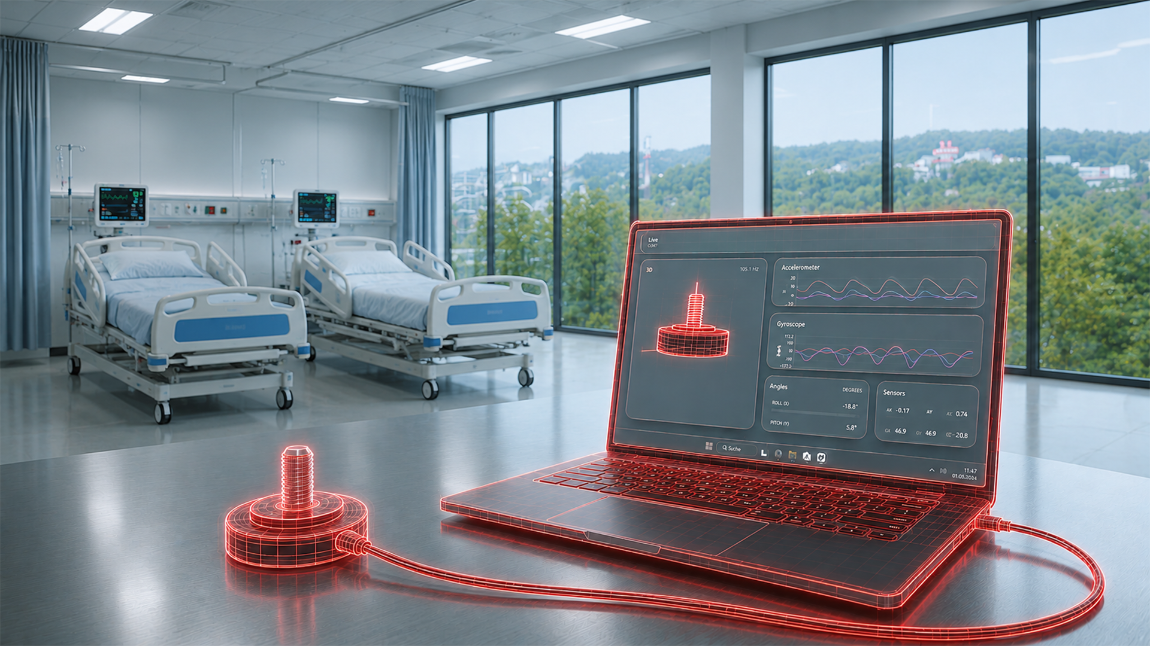
In many industrial systems, critical loads occur in places where conventional sensors simply cannot operate reliably. Consider a load-bearing mount in mobile equipment: exposed to vibration, shock, moisture, and contamination – yet expected to deliver precise measurement data for control and optimization.
Traditional sensor setups struggle in these environments. They require space, protection, and careful positioning, often adding complexity rather than solving it. This is where smart elastomers fundamentally change the approach.
By embedding sensing directly into functional materials, sensor-integrated elastomers transform passive components into intelligent system elements. Instead of adding sensors to a system, the system itself becomes the sensor – enabling real-time monitoring in mechanical systems, improved reliability, and scalable predictive maintenance with embedded sensors.
Modern mechanical systems require continuous insight into forces, vibrations, and environmental conditions. However, implementing reliable sensing in these systems remains a significant engineering challenge.
Conventional solutions – such as load cells or external accelerometers – introduce several limitations:
These limitations are especially critical when measuring load path monitoring, where forces must be captured exactly at the point of transmission.
Even alternative approaches, such as conductive elastomers or printed sensors, fall short due to drift, low robustness, or limited overload resistance.
Sensor-integrated elastomers overcome these limitations by embedding sensing capabilities directly into the elastomer component itself. This approach enables a seamless combination of mechanical function and data acquisition.
At the core of this innovation is proprietary load sensing elastomer (LSE) technology.
1. One Component, Fully Integrated
The elastomer simultaneously acts as:
All sensing electronics are fully integrated into the compact, ultra-thin sensor, meaning:
This significantly reduces integration complexity and ensures consistent measurement positioning.
The result is a true smart elastomer – a structural component that generates data.
2. Ultra-Thin and Scalable Design
A key differentiator is the extremely thin sensor architecture, enabling integration where conventional sensors cannot be used:
In addition, the technology is highly scalable:
This flexibility makes it suitable for both high-load industrial systems and precision applications.
3. Accuracy Through Integrated Algorithms
The sensor includes integrated algorithms and signal processing, directly embedded within the system.
These algorithms:
This ensures reliable real-time monitoring in mechanical systems, even in highly variable conditions.
4. Multi-Parameter Sensing and Functional Capabilities
Beyond force measurement, the system enables true multi-parameter sensing, including:
This enables advanced condition monitoring with elastomers, combining multiple sensing functions into a single compact component.
5. Built for Harsh Operating Conditions
The elastomer encapsulation provides intrinsic protection against:
This makes the technology ideal for applications:
6. Flexible Usage: Embedded or Standalone
While optimized for integration into elastomer components, the sensor can also be used:
This flexibility extends its applicability beyond classical elastomer use cases.
7. Manufacturing Expertise: Surviving Elastomer Processing
A critical challenge in developing sensor-integrated elastomers is the integration process itself. Elastomer manufacturing – particularly vulcanization – exposes components to high temperatures, high pressures, and chemically aggressive environments.
For conventional electronics, this process typically leads to:
Angst+Pfister has developed proprietary design and process know-how that enables sensors to withstand vulcanization without loss of functionality.
This includes:
This capability is a key enabler for reliable embedded sensors in mechanical components and a major technological differentiator.
| Parameter | Conventional Sensors | Smart Elastomers (LSE-Based) |
|---|---|---|
| Installation space | High | Minimal |
| System architecture | Multiple components | Single integrated component |
| Overload resistance | Limited | Up to 500-1000% FS |
| Measurement response time | Moderate | <50 ms |
| Measurement capabilities | Single parameter | Multi-parameter sensing option |
Beyond component-level specifications, performance is validated through application-specific testing. Angst+Pfister operates dedicated in-house test rigs, enabling:
This ensures that solutions are not only conceptually sound but tested and proven functional before deployment.
Performansın kritik olduğu sektörlerde, küçük bir sızıntı bile üretimin durmasına, yasal ihlallere veya maliyetli kontaminasyona yol açabilir. Bu risklere rağmen, yüksek stresli ortamlarda hâlâ standart elastomerler kullanılmakta ve bu da sistem performansı ile yasal uygunluğu tehlikeye atmaktadır.
Sonuç? Sık sızdırmazlık arızaları, plansız duruşlar, yasal riskler ve artan işletme maliyetleri.

From Concept to Component: Available Sensor Platforms
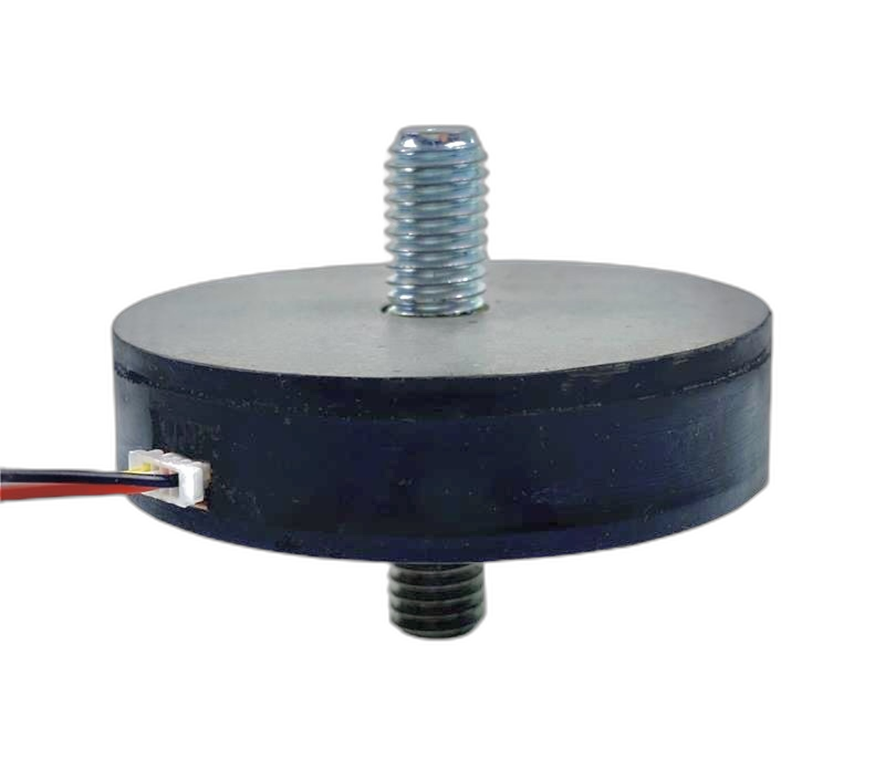
To translate this technology into real-world applications, several sensor platforms are available:
When to Use Smart Elastomers
Sensor-integrated elastomers are particularly valuable in applications where:
Video Q&A
What does it take to transform a passive elastomer into a fully functional sensing element?
In this video, Michael Tester, Head of Sensor Design Engineering at Angst+Pfister, explains how smart elastomers integrate sensing, processing, and protection into a single compact unit – and how this enables scalable predictive maintenance with embedded sensors across industries.
Conclusion
Smart elastomers represent a fundamental shift in mechanical system design. By integrating sensing directly into functional materials, they eliminate the need for separate sensors while improving robustness and simplifying system architecture.
With features such as:
combined with proprietary manufacturing expertise and validation through in-house test rigs – these systems deliver not only integration advantages but also proven reliability under real-world conditions.
As systems continue to evolve toward higher integration and intelligence, sensor-integrated elastomers will play a key role in enabling efficient, data-driven engineering solutions.
Smart elastomers are elastomer components with integrated sensing and signal processing capabilities, enabling real-time monitoring in mechanical systems.
A load sensing elastomer is a structural elastomer component that measures force directly within the load path, eliminating the need for external sensors.
Ultra-thin versions can be less than 1 mm thick, making them ideal for highly space-constrained applications.
These systems enable multi-parameter sensing, including vibration, acceleration, temperature, cycle counts, and overload detection.
Yes. The sensor can also be used as a standalone component, offering flexibility in system design.
Reliability is ensured through specialized manufacturing processes (including vulcanization compatibility) and validation using in-house test rigs under real operating conditions.
About the Author
Michael Tester is the Head of Sensor Design Engineering at Angst+Pfister Sensors and Powers, bringing over 10 years of expertise in merging advanced technology with material science. He specializes in developing integrated sensor platforms that transform passive mechanical components into intelligent, data-generating systems for harsh industrial environments.
Get connected!
Let’s talk about your challenges and how Angst+Pfister can support you.
Your one-stop shop for industrial components
Dive into the extensive range of standard applications in the online shop of APSOparts with great benefits for efficient order processes!