
在 LinkedIn 上联系
核心要点一览
.2025-03-24-15-02-12.png)
在许多工业系统中,关键负荷发生在传统传感器根本无法可靠运行的地方。 考虑移动设备中的承重支架:暴露在振动、冲击、潮湿和污染中——但仍被要求为控制和优化提供精确的测量数据。
传统的传感器装置在这些环境中举步维艰。 它们需要空间、保护和精确的定位,往往增加了复杂性而不是解决问题。 这正是智能弹性体从根本上改变方法的地方。
通过将传感直接嵌入功能材料中,集成传感器的弹性体将无源组件转变为智能系统元件。 与其向系统添加传感器,不如让系统本身成为传感器——从而实现机械系统的实时监控、提高可靠性以及带有嵌入式传感器的可扩展预测性维护。
现代机械系统需要持续洞察力、振动和环境条件。然而,在这些系统中实现可靠的传感仍然是一项重大的工程挑战。
传统解决方案(如称重传感器或外部加速度计)存在以下局限性:
这些局限性在测量负载路径监测时尤为关键,因为力必须在传输点被精确捕获。
即使是替代方案(如导电弹性体或印刷传感器),由于漂移、鲁棒性低或过载电阻有限,也显得不足。
.
解决方案
集成传感器的弹性体通过将传感功能直接嵌入弹性体组件本身来克服这些局限性。 这种方法实现了机械功能与数据采集的无缝结合。
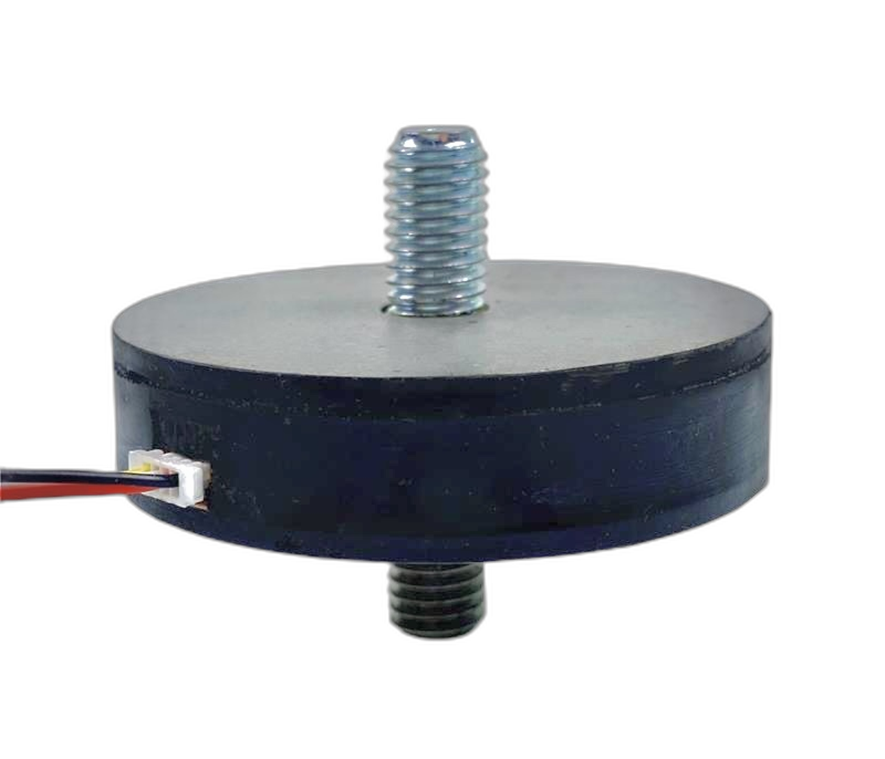
这项创新的核心是专有的负载传感弹性体 (LSE) 技术。
1. One Component, Fully Integrated
The elastomer simultaneously acts as:
All sensing electronics are fully integrated into the compact, ultra-thin sensor, meaning:
This significantly reduces integration complexity and ensures consistent measurement positioning.
The result is a true smart elastomer – a structural component that generates data.
2. Ultra-Thin and Scalable Design
A key differentiator is the extremely thin sensor architecture, enabling integration where conventional sensors cannot be used:
In addition, the technology is highly scalable:
This flexibility makes it suitable for both high-load industrial systems and precision applications.
3. Accuracy Through Integrated Algorithms
The sensor includes integrated algorithms and signal processing, directly embedded within the system.
These algorithms:
This ensures reliable real-time monitoring in mechanical systems, even in highly variable conditions.
4. Multi-Parameter Sensing and Functional Capabilities
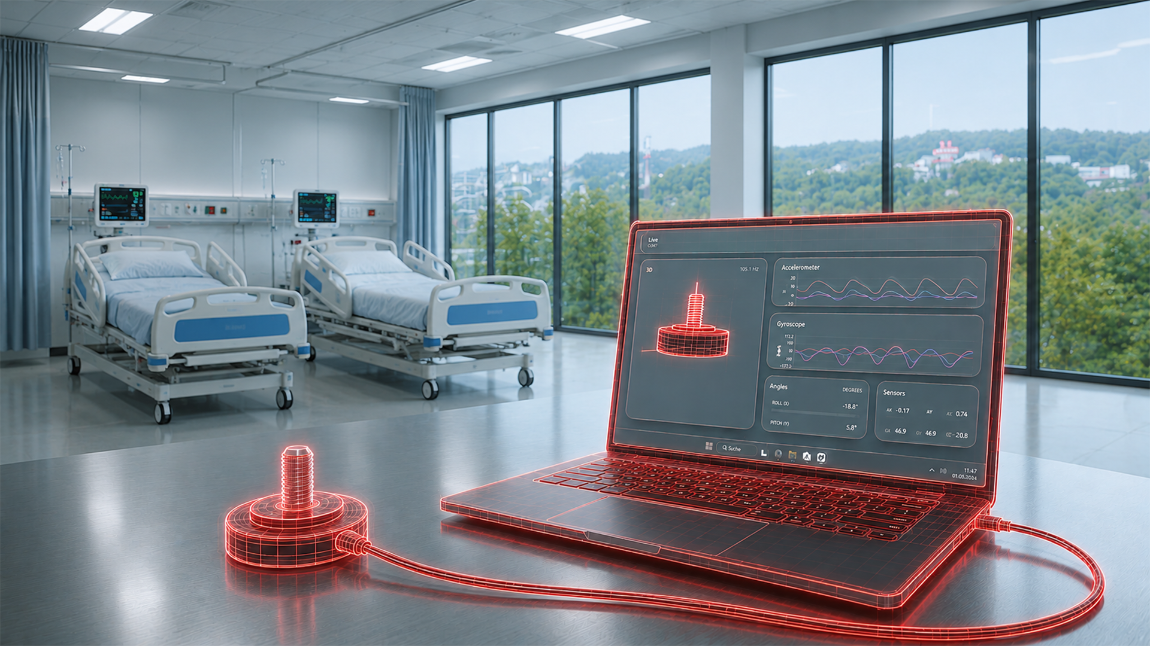
Beyond force measurement, the system enables true multi-parameter sensing, including:
This enables advanced condition monitoring with elastomers, combining multiple sensing functions into a single compact component.
5. Built for Harsh Operating Conditions
The elastomer encapsulation provides intrinsic protection against:
This makes the technology ideal for applications:
6. Flexible Usage: Embedded or Standalone
While optimized for integration into elastomer components, the sensor can also be used:
This flexibility extends its applicability beyond classical elastomer use cases.
7. Manufacturing Expertise: Surviving Elastomer Processing
A critical challenge in developing sensor-integrated elastomers is the integration process itself. Elastomer manufacturing – particularly vulcanization – exposes components to high temperatures, high pressures, and chemically aggressive environments.
For conventional electronics, this process typically leads to:
Angst+Pfister has developed proprietary design and process know-how that enables sensors to withstand vulcanization without loss of functionality.
This includes:
This capability is a key enabler for reliable embedded sensors in mechanical components and a major technological differentiator.
结果与性能验证
| Parameter | Conventional Sensors | Smart Elastomers (LSE-Based) |
|---|---|---|
| Installation space | High | Minimal |
| System architecture | Multiple components | Single integrated component |
| Overload resistance | Limited | Up to 500-1000% FS |
| Measurement response time | Moderate | <50 ms |
| Measurement capabilities | Single parameter | Multi-parameter sensing option |
Beyond component-level specifications, performance is validated through application-specific testing. Angst+Pfister operates dedicated in-house test rigs, enabling:
This ensures that solutions are not only conceptually sound but tested and proven functional before deployment.
Challenge:
A transport system requires continuous monitoring of load forces under dynamic conditions. The system operates under vibration, shock, and contamination, with limited installation space.
Solution:
A load sensing elastomer replaces the conventional mount. The integrated system:
Result:
From Concept to Component: Available Sensor Platforms
To translate this technology into real-world applications, several sensor platforms are available:
When to Use Smart Elastomers
Sensor-integrated elastomers are particularly valuable in applications where:
Video Q&A
What does it take to transform a passive elastomer into a fully functional sensing element?
In this video, Michael Tester, Head of Sensor Design Engineering at Angst+Pfister, explains how smart elastomers integrate sensing, processing, and protection into a single compact unit – and how this enables scalable predictive maintenance with embedded sensors across industries.
Conclusion
Smart elastomers represent a fundamental shift in mechanical system design. By integrating sensing directly into functional materials, they eliminate the need for separate sensors while improving robustness and simplifying system architecture.
With features such as:
combined with proprietary manufacturing expertise and validation through in-house test rigs – these systems deliver not only integration advantages but also proven reliability under real-world conditions.
As systems continue to evolve toward higher integration and intelligence, sensor-integrated elastomers will play a key role in enabling efficient, data-driven engineering solutions.
强效清洁化学品和高温会使许多弹性体材料发生劣化,导致硬化、化学变质以及密封力下降。
适用。PTFE密封件可采用符合食品级标准的材料制造,既满足卫生设计要求,又能提供可靠的动态性能。
PTFE具有固有的低摩擦系数特性,可减少密封界面产生的热量与磨损。在涉及摩擦学性能较差介质的应用中,密封材料的低摩擦特性尤为有利。
硅胶填充设计可防止颗粒侵入,而全封装弹簧方案能在CIP/SIP过程中抵御化学物质侵蚀。
在动态、强腐蚀性或高温环境中,PTFE密封件通常具有更长的使用寿命和更稳定的性能。
可以。PTFE密封件既提供标准设计,也可根据具体操作和卫生要求进行工程定制。
关于作者
迈克尔·泰斯特(Michael Tester)是安格斯+普菲斯特传感器与动力公司(Angst+Pfister Sensors and Powers)的传感器设计工程主管,在将先进技术与材料科学相结合方面拥有超过10年的专业经验。他专长于开发集成传感器平台,将被动机械组件转化为适用于恶劣工业环境的智能数据生成系统。
我们让它发挥作用!
请联系我们,我们会尽快给您回复!
了解最新信息!
今天就注册我们的时事通讯,接收我们最新的产品信息和最新的行业趋势!